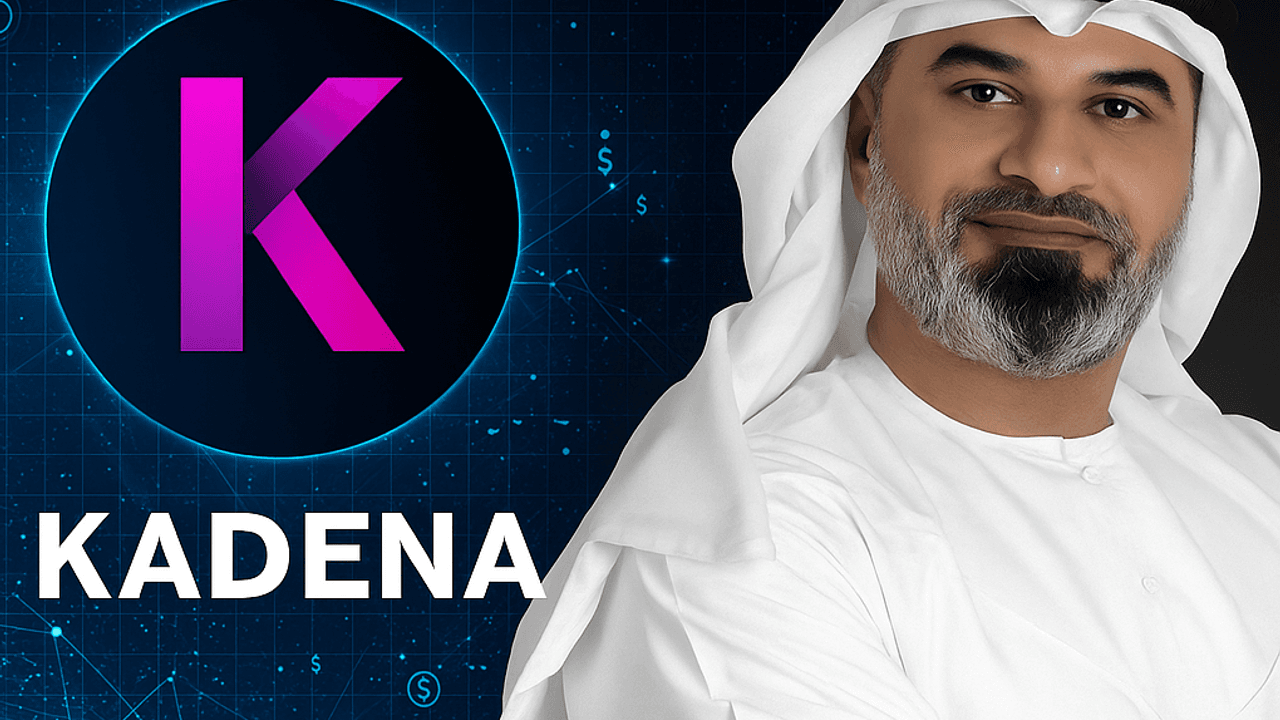
Kadena’s Missed Rebuild: $60M in Capital, $30M in Tech — The Unclaimed Plan by Mohammed Khalifa, NuGenesis, AGA, Kingdom Trading and MKHA Global
Kadena – once a multi-billion-dollar Layer-1 blockchain – suffered a dramatic collapse in 2025. Its founding organization ceased operations, leaving the proof-of-work network in limbo and “on life-support” maintained only by a few independent miners. Amid this crisis, a consortium led by MKHA Global Investments (headed by Mohammed Khalifa) and Advantage Group Australasia (AGA) – known for its NuGenesis blockchain project – stepped forward with an ambitious rescue proposal. Documented in a detailed Letter of Intent (LOI), the offer aimed to merge Kadena with NuGenesis’s technology and inject roughly $90 million to revive the network. This plan envisioned a sweeping overhaul of Kadena’s ownership, governance, and technology.
The LOI laid out how the “Kadena Powered by NuGenesis (KPN)” partnership would work, from equity splits to technical integration. However, despite the promise of substantial new funding and infrastructure, the offer was ultimately not accepted by Kadena’s original leadership , and no binding agreement was reached. Even so, the proposed plan remains notable as a potential model for distressed blockchain turnarounds. And in the absence of an official deal, Kadena’s own community has since taken up the mantle – hard-forking the chain and continuing its operation independently
f2pool.zendesk.com
. In the sections below, we examine the key elements of the rejected merger plan – what it entailed and how it could have transformed Kadena – and then look at the current community-led revival that is unfolding in its wake.
Inside the $90 Million Recovery Plan
The consortium’s proposal offered a comprehensive $90 million recovery package combining liquidity, investment capital, and technology infusion to resuscitate Kadena’s ecosystem. The funding and resource commitments in the LOI can be broken down as follows:
$50 Million Liquidity Pledge: AGA secured a USDT 50 million token subscription pledge from a reputable outside investor as an immediate liquidity backstop. The plan was to deploy this capital via a dedicated “Token Facility” that would inject reserves directly to KDA coin holders (rather than to the project’s treasury) to restore market confidence. This was a unique approach to support long-suffering token holders and stabilize KDA’s price and trading liquidity.
$30 Million in Technology Infusion: In parallel, AGA (through its NuGenesis platform) committed to contribute proprietary blockchain technology valued at over $30 million to modernize Kadena’s infrastructure. This included integrating NuGenesis’s advanced multi-chain architecture – notably a Layer-0 “Decentralised Digital Highway” for cross-chain governance – on top of Kadena. The technology package (with an estimated replacement cost exceeding $30M) encompassed enhancements in scalability, security, and even AI-driven network management, leveraging NuGenesis’s cutting-edge tech stack
coingape.com
.
$10–20 Million in Additional Capital: Beyond the token pledge, the consortium planned to raise further venture capital in the range of AUD 10 million to USD 20 million to fund growth and development. This funding would support long-term expansion once immediate recovery milestones were met. All such investments were contingent on due diligence and the resolution of Kadena’s outstanding issues, ensuring new money would only deploy if the reboot plan proved viable.
Together, these components amounted to roughly $90 million of support for Kadena’s turnaround (including ~$50M in liquidity, up to ~$20M in new capital, and ~$30M in tech contributions). Such a sizable package was intended to not only refinance the project but fundamentally reboot its technology and ecosystem – a far more extensive intervention than Kadena’s own earlier $20M “rejuvenation fund” idea, which had been criticized as lacking tangible backing.
Restructuring Ownership: 25/25/25/25 Equity Model and Miner Co-Ownership
A core element of the proposal was a radical equity restructuring to align all stakeholders in the new venture, dubbed KPN (Kadena Powered by NuGenesis). The LOI outlined a balanced 25%/25%/25%/25% ownership model for the new entity:
25% – Miner Community: Kadena’s miners and community would collectively own 25% of the new company, and this stake would be non-dilutable with full governance rights . By giving miners an equity share, the plan effectively made the network’s security providers into co-owners of the ecosystem – an unprecedented move to align miners’ incentives with the project’s success.
25% – Original Kadena Stakeholders: Another 25% equity was designated for “NEWCO plus Kadena LLC and Corro LLC,” meaning the existing Kadena founders, team (Corro LLC is associated with Kadena’s founders), and any new management joining the venture. Importantly, strict vesting restrictions were imposed on this group: the founders agreed to a 12-month lockup (no sales) followed by a 24-month vesting period on any equity or tokens received. This three-year lock-up ensured that the original team could not simply cash out, and would only benefit long-term if the network genuinely recovered.
25% – AGA and Kingdom Trading: AGA (Advantage Group Australasia) and its partner Kingdom Trading would receive 25% of the equity. This reflects the consortium’s role in orchestrating the deal, contributing technology and capital. Their equity would vest according to agreed terms, and they would help lead the network’s turnaround as new management stakeholders.
25% – MKHA and MK Innovations: The final 25% was allocated to MKHA Global Investments (Mohammed Khalifa’s investment vehicle) and its affiliate MK Innovations (MKAN). MKHA, as a principal investor driving the rescue attempt, would commit resources and expertise, and in return hold a quarter stake in the restructured entity.
Under this cap table, no single party would hold a majority – a deliberate design to distribute control. All shareholders would have voting rights proportional to their ownership on key decisions, ensuring shared governance of “Kadena Powered by NuGenesis” moving forward. Notably, the inclusion of the Kadena miner community as shareholders stands out as a pioneering concept. It effectively meant Kadena’s user-base and network operators would own a piece of the network’s equity, blurring the line between token holders and shareholders. This was intended to foster community trust after the original project’s implosion and to reward those who kept the chain alive. The plan also mandated the creation of Digital Notarised Contracts (DNCs) or NFTs to legally represent the community’s shares on-chain, making the equity distribution transparent and enforceable via smart contract.
To prevent history from repeating, governance changes were integral to the restructuring. The LOI’s timeline outlined a dedicated phase for “Governance Activation,” involving the establishment of a new on-chain governance system and a formal miner co-ownership structure for decision-making. In practice, AGA proposed to implement robust governance frameworks (leveraging expertise from running the NuGenesis network) to replace the vacuum that contributed to Kadena’s downfall. This would include on-chain voting mechanisms (a DAO-like structure) and oversight processes to ensure accountability. Certain safeguards were built in – for example, AGA’s approval would be required for critical actions like any reissuance of tokens or changes to tokenomics, to prevent reckless decisions. Overall, the ownership and governance plan aimed to align all parties’ incentives : community miners get skin in the game, new investors secure oversight to protect their capital, and founders are locked into growing long-term value. It was a dramatic shift from Kadena’s previous centralized foundation control to a more inclusive, multilateral ownership model.
Technological Overhaul: Layer-0 Integration and AI-Driven Governance
Beyond financial engineering, the merger proposal promised to transform Kadena’s technology stack by merging it with NuGenesis’s state-of-the-art blockchain architecture. Kadena’s existing chain (a proof-of-work multi-chain system with the Pact smart contract language) would have been augmented by NuGenesis’s Layer-0 and Layer-1 innovations .
Layer-0 “Digital Highway”: NuGenesis is built as a network of interoperable blockchains with a Layer-0 governance and verification layer connecting them. According to the LOI, Kadena’s core product would be integrated with this decentralized Layer-0 highway , enabling coordinated cross-chain governance and high-speed interconnectivity. This means Kadena could tap into a broader ecosystem of chains and benefit from cross-chain voting, sharding, and unified security. Essentially, Kadena would no longer be an isolated chain but part of a larger multi-chain network, potentially increasing its scalability and use cases dramatically.
AI-Enhanced Governance & Security: A distinguishing feature of NuGenesis’s platform is its use of artificial intelligence in managing the blockchain. NuGenesis’s network is “secured by dual-layer internal and external AI” for automation and enhanced integrity
coingape.com
. Its design reduces reliance on human miners/validators by automating many functions and continuously optimizing via AI-driven processes
coingape.com
. By overlaying NuGenesis tech onto Kadena, the plan envisaged introducing AI-driven governance insights and automated network management. An AI could, for instance, analyze on-chain data to suggest protocol tweaks or predict scaling needs. This would have been a cutting-edge addition to Kadena, potentially making the network more adaptive and resilient. While the LOI itself didn’t explicitly mention “AI governance”, the inclusion of NuGenesis’s tech implicitly meant Kadena would inherit these advanced capabilities. AGA’s team would implement modern governance protocols “underscored by AI” to ensure sustainable, self-correcting network operations going forward
coingape.com
.
Hybrid Architecture and Improved Scalability: The combined Kadena-NuGenesis system (tentatively called KPN) would run on a hybrid Layer-1 architecture blending Kadena’s existing chain with NuGenesis’s substrate-based chains
coingape.com
. NuGenesis is known for gasless transactions and high throughput, having been built for government-scale applications with multilingual cross-chain support
coingape.com
coingape.com
. Integrating these features could have resolved Kadena’s prior scaling limitations. The final phase of the plan was a full platform relaunch of Kadena under this new hybrid architecture – effectively turning it into a next-generation chain with capabilities like fee-less transactions, integrated exchange modules, and even satellite connectivity (technologies NuGenesis touts)
coingape.com
. In short, the technical overhaul sought to breathe new life into Kadena by leveraging NuGenesis’s seven years of R&D in blockchain innovation, from advanced consensus algorithms to legal-ready digital asset frameworks.
Crucially, these tech improvements were not just theoretical – AGA was prepared to self-fund and contribute the engineering work and infrastructure needed. The LOI committed AGA’s resources and a team of experts to carry out the integration and get Kadena “to [an] acceptable state for sophisticated investment”. With an estimated $30M+ worth of software, hardware, and intellectual property being injected, the deal would have immediately upgraded Kadena to a more modern standard. The combination of fresh technology, AI-powered governance, and multi-chain interoperability represented a dramatic leap forward from Kadena’s status quo – potentially making the network attractive again to developers and users, and shedding the baggage of its collapse.
Liquidity and Community Confidence Measures
Another innovative aspect of the plan was how it addressed liquidity and community confidence head-on. The establishment of the Token Facility to deploy the $50M pledge is a critical piece. Rather than using the funds to simply pay expenses or bail out insiders, AGA’s approach was to channel liquidity straight to the token holders . This could have taken forms such as token buybacks, special dividends or airdrops, or setting up liquidity pools – essentially putting money in the hands of KDA investors and miners who had suffered severe losses (Kadena’s token was down over 99% from its peak). By doing so, the consortium intended to swiftly rekindle trust and signal that the coin itself had tangible backing. It’s a strategy to counter the “panic and pessimism” with a headline figure – $50 million – that says the network isn’t dead but has substantial support.
This direct-to-holder liquidity infusion is unusual in crypto turnarounds, where funds often go into company coffers or development budgets. Here, the emphasis was on immediate market liquidity : boosting exchange order books, incentivizing holding, and possibly compensating small holders who might otherwise abandon the project. In effect, it was akin to a community stimulus package. Coupled with a proposed tightening of tokenomics (e.g. halting or reducing Kadena’s very high mining emissions), the goal was to stabilize KDA’s price and reduce sell-pressure which had been crushing the token’s value.
Additionally, the plan’s governance reforms (discussed above) were designed to restore confidence. Kadena’s collapse was exacerbated by a lack of transparent governance and alleged misconduct by leadership, which eroded the community’s faith. By instituting community ownership and on-chain governance, the new structure aimed to show that the project would be run openly and accountably going forward , not behind closed doors. The consortium even considered setting up a legal foundation to hold assets and a recovery council to manage the turnaround – measures often seen in rescuing distressed projects to provide oversight.
In summary, the rescue plan tackled the problem of confidence on two fronts: monetary relief (liquidity to holders and treasury reserves for stability) and governance reform (empowering the community and new management). For investors in distressed crypto assets, this two-pronged approach – aligning economic incentives and trust in governance – could serve as a blueprint for reviving other struggling blockchain networks.
A Blueprint for Distressed Blockchains?
Although it never came to fruition, the Kadena recovery proposal stands out as a case study in creative crisis management for a blockchain project. In the cryptosphere, outright mergers or acquisitions of Layer-1 chains are extremely rare , especially ones involving heavy community ownership and technology swaps. This proposal effectively treated a failing public blockchain somewhat like a distressed company restructuring: new capital injected, old shareholders diluted (but not wiped out), management changes, and a pivot in business strategy.
Several aspects of the plan could be instructive for other distressed blockchain projects:
Community Equity Participation: By giving 25% equity to miners and users, the plan acknowledged the community as a key asset. This is analogous to employee stock ownership in corporate turnarounds – aligning those who secure and support the network with its future upside. Other failing projects might consider ways to formally grant stakeholders ownership stakes, beyond just holding the token, to rebuild trust.
Fresh Capital with Accountability: The headline pledge of $50M in liquidity was conditioned on meeting certain standards and due diligence . This shows that any bail-out funds should be accompanied by strict oversight and triggers (milestones, independent valuations, etc.) to ensure the money is used effectively. It’s a template for structured investment in a crypto project: funds held in escrow or released upon achieving network recovery benchmarks.
Technological Integration vs. Starting Over: Kadena’s rescuers didn’t propose to scrap the chain entirely, but to overlay a new technology stack onto it . This middle path – neither a pure fork from scratch nor a blind continuation – could inspire similar “tech mergers.” For instance, a struggling chain could be merged into a more modern protocol (as Kadena would have into NuGenesis’s multi-chain framework) to quickly gain features like better scalability or governance. It’s a reminder that in Web3, communities and code can be transplanted into new ecosystems if needed.
Founder Vesting and Role Limitations: The strict lock-ups on Kadena’s founders and the requirement that new management take the helm illustrate a tough-love approach: any revival must address the human factor that led to failure. Future rescue deals will likely demand founders of failing projects to cede control and economic power, at least until recovery is proven. This reduces moral hazard and signals to investors that the “old ways” are truly over.
In short, the Kadena rescue plan showcased an innovative mix of financial, technical, and governance strategies that could well serve as a playbook for revitalizing collapsed crypto networks . It treated the blockchain network as something that could be recapitalized, upgraded, and put under new governance , much like a distressed business being turned around. While not every element may suit other situations, the overarching principle is that even a near-dead blockchain can potentially be saved with the right infusion of capital, technology, and community ownership – provided there is a group willing to champion it.
Aftermath: Community Fork and Outlook for Kadena 2.0
The proposed merger ultimately did not go ahead – and Kadena’s original team walked away. But the story didn’t end there. In October 2025, Kadena’s core developers officially announced they were ceasing project operations , essentially abandoning the chain
f2pool.zendesk.com
. Left without an active team or foundation, the Kadena community itself decided to take over . By early November, community developers and miners coordinated a hard fork of the Kadena network , creating what is now referred to as the “Kadena community version”
f2pool.zendesk.com
. This community-led fork is effectively Kadena’s second life: an unofficial continuation of the blockchain, maintained by volunteers and believers in the technology.
Major mining pools like F2Pool quickly signaled support for the community fork, upgrading their infrastructure to the new chain so miners could continue securing the network
f2pool.zendesk.com
. In doing so, the community essentially achieved one key aspect of the rejected plan – miner ownership and control . Without a central company in charge, Kadena is now truly in the hands of its miners and users. As F2Pool’s announcement cautioned, the new version is not maintained by the original team and may carry technical risks
f2pool.zendesk.com
. Nonetheless, the network is up and running , processing blocks and transactions, which is a testament to the resilience of the community.
The road hasn’t been easy. The loss of official support led to fast repercussions in the market: Binance, one of the largest exchanges, announced it would delist Kadena (KDA) on November 12, 2025 due to the project no longer meeting its quality standards (citing factors like team commitment and network stability)
binance.com
. Other exchanges followed suit or halted KDA trading. By late 2025, Kadena’s token was trading only on a few minor platforms, its market cap a shadow of its former self. These setbacks might have been fatal under normal circumstances.
Yet, the momentum of the community-driven effort has not been stopped . The remaining Kadena community is actively discussing governance on forums, coordinating via social channels, and even exploring re-listing the “new” KDA on smaller exchanges. Developers are maintaining the Kadena codebase on GitHub, and some have proposed implementing parts of AGA/NuGenesis’s plan (e.g., adjusting token emission rates and improving governance processes) on the community chain, albeit on a smaller scale. In effect, the community fork is trying to realize the spirit of the recovery plan without the benefit of $90M funding – relying instead on open-source collaboration and organic growth.
Conclusion: From Collapse to Community Renaissance
While the grand merger and recovery proposal for Kadena did not materialize, its legacy endures in the lessons it offered and the community resolve it perhaps inspired. Kadena’s journey over 2024–2025 has been a dramatic saga – from a precipitous fall of a once-hyped blockchain, to an eleventh-hour rescue attempt by external investors, to an improbable grassroots revival by its community . The fact that Kadena’s network continues to operate, even after being abandoned by its founders and delisted by major exchanges, is an optimistic sign in itself. It speaks to the fundamental value that a passionate community can see in a technology, regardless of market setbacks.
Investors and observers will be watching the community-run Kadena with cautious optimism. Freed from its old management and reeling from near-death, Kadena now has a chance to rebuild in a truly decentralized fashion. Ironically, some of the consortium’s proposed ideas – greater community governance, miners in charge, lean operations – are being forced into action by necessity. If the community edition of Kadena can stabilize and perhaps attract new developers, it may gradually implement features like those in the NuGenesis plan (for example, improved governance or technical bridges to other networks).
The story of the rejected Kadena merger underscores that in crypto, failure is not always final. Even when institutional deals fall through, a project’s users and miners may refuse to let it die. Kadena’s community has effectively said: if not on the terms of a merger, then on our own terms . Going forward, it will be fascinating to see where this community-driven Kadena 2.0 goes. Will it fizzle out due to lack of resources, or could it gain traction and perhaps even entice new partnerships or investments down the line? The coming months will tell, but the tone in the community channels is constructive and forward-looking.
In an industry often marred by short-lived projects, Kadena’s saga offers a hopeful twist – that genuine believers can pick up the pieces and carry on. The rejected $90M rescue plan may have been visionary, but ultimately, the true lifeline for Kadena has been its community . If they succeed in slowly turning the network around, it could validate much of what was proposed, and shine a light on a new path for distressed blockchains: one where community and innovation , more than money alone, restore a network to health. Investors who once wrote off Kadena might yet find reason to take a second look, as the project reboots itself from the ground up. The resilience demonstrated so far leaves room for optimism about the future direction of this community-led Kadena and what it might achieve in the years ahead.
Sources: The information in this article is based on the Kadena–NuGenesis Letter of Intent, internal recovery strategy documents provided by AGA/NuGenesis, and public announcements such as Binance’s delisting notice
binance.com
and F2Pool’s statement on the Kadena community fork
f2pool.zendesk.com
. These materials detail the proposed deal’s terms and the subsequent community takeover, illustrating a unique chapter in blockchain restructuring history.