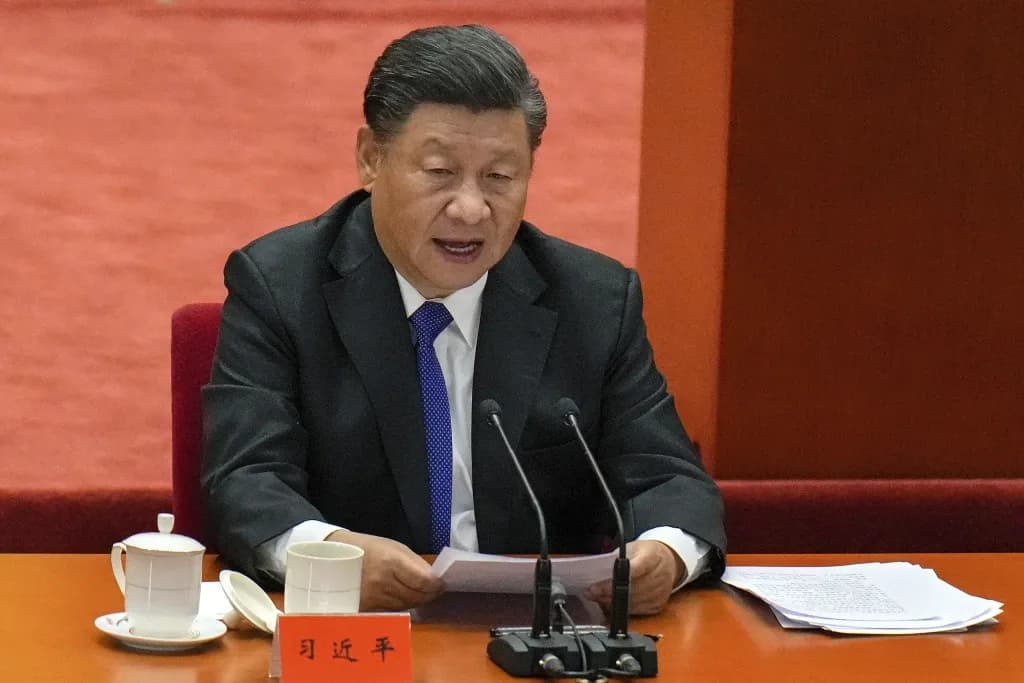
In a prerecorded address aired at the World Internet Conference Summit in Wuzhen, Chinese President Xi Jinping emphasized the need for global cooperation in addressing the potential risks associated with artificial intelligence (AI). His comments, however, came in the context of China's strict control over internet free speech. Despite this control, China has leveraged the economic benefits of the internet and the propaganda potential of social media to advance the goals of the ruling Communist Party.
Xi advocated for collaborative efforts to ensure common security in cyberspace, rejecting the idea of "cyberspace hegemony." He highlighted China's commitment to working with other nations to manage the risks arising from AI development. Xi stated that China is prepared to "promote the safe development of AI" and mentioned the recently launched Global AI Governance Initiative, which aims to create an open and fair environment for AI development.
Li Shulei, the director of the Communist Party’s publicity department, echoed Xi's sentiments, expressing China's willingness to collaborate with other countries to enhance the safety, reliability, controllability, and fairness of AI technology.
The annual World Internet Conference Summit, initiated by the Chinese government in 2014 to discuss internet development, has historically been a platform for such discussions. Notably, China lifts restrictions on overseas news and social media sites in the Wuzhen area during the conference, despite its broader practice of blocking most such platforms.
The backdrop of Xi's speech includes recent incidents of cyber activities involving China. In June, Chinese state-backed hackers reportedly breached Microsoft's cloud-based security, accessing email accounts of officials from various U.S. agencies dealing with China. The targeted espionage was discovered in mid-June, and though no classified systems were compromised, officials, including Commerce Secretary Gina Raimondo, were affected. The incident follows earlier charges by the U.S. Justice Department in September 2020 against five Chinese citizens for hacking over 100 companies and institutions globally.
Xi's call for international collaboration on AI risks comes amid growing concerns about cyber threats and the dual nature of China's internet policies—strict control and active participation in the digital realm.