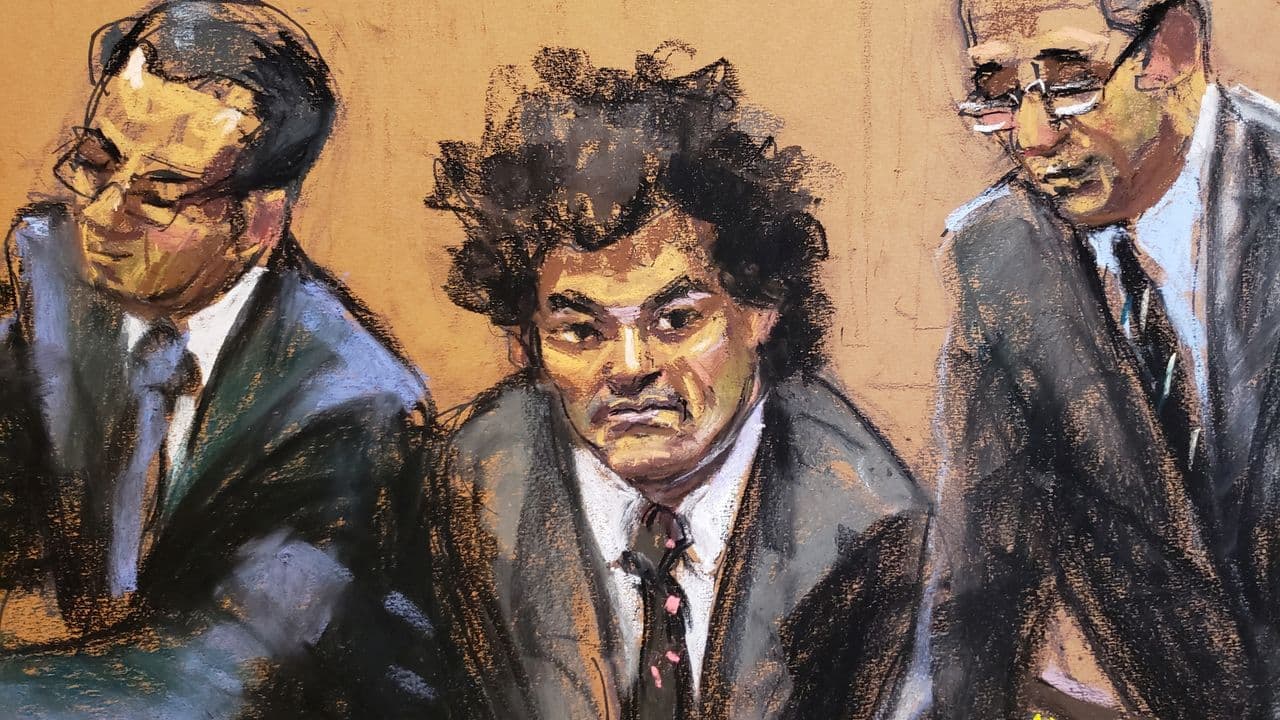
Title: Sam "SBF" Bankman-Fried Found Guilty on All 7 Counts: A Cryptocurrency Trial Analysis
In a dramatic courtroom showdown, Sam "SBF" Bankman-Fried, the former founder of the cryptocurrency exchange FTX, has been found guilty on all seven counts brought against him in a recent trial. These charges, which include wire fraud, conspiracy, and securities fraud, were filed by various U.S. government agencies, including the Securities and Exchange Commission (SEC), the Commodity Futures Trading Commission (CFTC), and the Department of Justice (DoJ).
The trial unfolded in the U.S. Southern District of New York under the watchful eye of Judge Lewis Kaplan, and it concluded with the jury's unanimous decision to convict SBF on all counts. The charges in question consisted of two counts of wire fraud conspiracy, two counts of wire fraud, one count of conspiracy to commit commodities fraud, one count of conspiracy to commit securities fraud, and one count of conspiracy to defraud the United States and commit campaign finance violations.
These convictions mark a significant turning point in the legal battle that has captivated the financial world. The jury instructions provided by Judge Kaplan clarified the nature of the charges, emphasizing that counts one and three were substantive, alleging schemes to defraud FTX customers and lenders to Alameda Research using interstate wires. Importantly, these charges did not require proof of actual harm to victims but instead focused on SBF's contemplation of harm.
Addressing SBF's defense, which had relied on advice from FTX counsel Daniel Friedberg, Judge Kaplan underscored that a lawyer's involvement does not serve as an automatic defense. Intent, he emphasized, can be inferred from circumstantial evidence, a pivotal point in the trial.
Regarding conspiracy charges in counts two and four, Judge Kaplan clarified that it was sufficient to establish that two or more individuals reached a common understanding to violate the law. However, he cautioned against misconstruing mere presence at a crime scene or association with a criminal as a crime in itself.
Throughout the trial, key FTX executives, including former Alameda CEO Caroline Ellison, former FTX CTO Gary Wang, and former FTX head of engineering Nishad Singh, had pleaded guilty to charges related to the exchange's collapse in November. These individuals cooperated with the U.S. government, providing testimonies against SBF that contributed to his conviction.
With SBF found guilty on all seven charges, the potential consequences are severe. Bankman-Fried could potentially face a maximum penalty of 115 years in prison, making this verdict a significant and high-stakes outcome. The jury's decision has far-reaching implications not only for SBF but also for the broader cryptocurrency industry, underscoring the importance of accountability and regulatory oversight in this rapidly evolving sector.