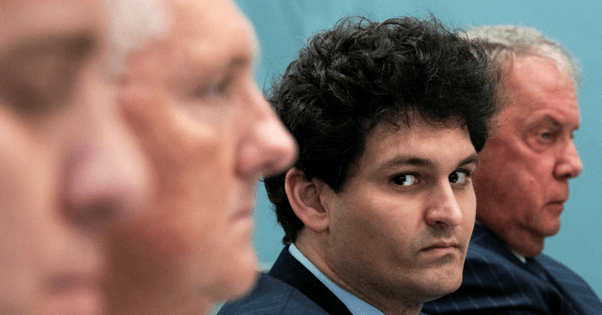
FTX, Alameda AND Sam Bankman-Fried,
Sam Bankman-Fried is the co-founder of FTX, a cryptocurrency exchange which Forbes says currently accounts for 10% of all digital asset derivative trading each month. He also runs Alameda Research, a trading company raking in more than a billion dollars in profit a year and is invested in countless more digital asset companies—some more publicly than others.
Like many investors in the digital asset industry, Bankman-Fried and his network of companies have done very well out of the recent boom, particularly out of their interest in exchanges and market makers.
The ongoing Tether fiasco has revealed that unbacked USDT is likely being printed and then swapped for BTC on exchanges, artificially inflating the price of BTC while exchanges enjoy ballooning commissions from both the processing of USDT and the general rise in speculative activity that these price boosts are inviting.
But Bankman-Fried and FTX’s ties to Tether go beyond merely enjoying the increased activity that Tether’s constant printing brings to exchanges throughout the ecosystem. Much of the digital asset industry is made up of a closely-aligned network of companies , as well as individuals and their financial interests, so it’s relatively easy to get the measure of a person and their affiliations based on who they defend.
Bankman-Fried is no exception to this. He’s been an outspoken defender of Tether, even at a time when the New York Attorney General’s investigation was proving that the stablecoin wasn’t actually stable at all:
Has a crypto-bro ever tweeted out “I don’t know what to tell you” and not been trying to pull the wool over your eyes? Bankman-Fried was likely well aware at this point that in Tether’s user agreement, they accept no obligation to redeem a single USDT, and he mischaracterizes the concern surrounding Tether by implying that because he has been able to sell his Tether, everyone else holding the some $73 billion worth of USDT will be able to do the same once everyone begins to run for the exit.
Days later, the NYAG released the results of their investigation , confirming that Tether had been lying about its backing. At the same time, Tether and their general counsel Stuart Hoegner outright lied to their customers about the outcome of the NYAG investigation, saying that the investigators made “no negative findings whatsoever that tethers were not fully backed, nor were ever issued without backing.”
Fried endorsed the lie immediately, tweeting his congratulations to the Tether team and saying that “the Tether FUD was never grounded in truth.”
Well, it should come as no surprise that just a mere month after Bankman-Fried so nonchalantly defended Tether as though he was an impartial observer, his company FTX became the single biggest recipient of over a billion dollars’ worth of newly minted USDT in February 2021 .
More than that, independent research done by Protos also confirmed that Alameda Research was the recipient of nearly a third of all USDT ever printed —and 86% of that was minted in the last year. Of the USDT sent to Alameda, 87% went directly to FTX, 12% went to Alameda’s wallets on Binance, Huobi and OKEx, while the remaining 2% (still accounting for a huge $705 million worth) went to non-exchange addresses.
This is further echoed in research done by the Journal of Finance , which last year demonstrated that the exchanges in receipt of newly minted USDT are typically sending them directly to subsidiary exchanges, which almost always results in positive moves in the BTC price within hours.
And despite what Bankman-Fried’s early 2020 tweets would imply, he (or at least FTX) was closely connected with the Tether team for quite some time. FTX’s current chief compliance officer and former general counsel is Daniel S. Friedberg, who previously worked with Tether’s general counsel Stuart Hoegner on the Ultimate Bet/Excapsa disaster . Friedberg himself was caught on tape advocating that Ultimate Bet cover up a cheating scandal by lying in order to shift the costs to another company.
Sam Bankman-Fried is also no stranger to accusations of market manipulation.
In 2017 A plaintiff called “Bitcoin Manipulation Abatement LLC” had launched a class-action suit against cryptocurrency derivatives exchange FTX, partner firm Alameda Research and several associated individuals alleging they are, “well known among cryptocurrency traders for being principal manipulators of the Bitcoin spot and Bitcoin derivatives markets.”
According to the FTX website, FTX was incubated by Alameda Research.
According to a court filing lodged November 4th in San Francisco:
“Plaintiff BMA…alleges that during the time period from about November 20, 2017 and until present time… Defendants…Bankman-Fried, Wang, Croghan, CWang, Wong and Ellison conspired…and participated in a long-running enterprise…engaging in a continuing pattern of racketeering activity involving, among other unlawful acts, operating an unlicensed money transmitting business…money laundering…wire fraud…interstate transportation of stolen property…perpetrating a manipulative, fraudulent and deceptive scheme to manipulate the prices of certain cryptocurrency derivatives, including, without limitation, bitcoin future contracts, bitcoin swaps, as well as the cash prices of cryptocurrencies…”
“The sheer magnitude of Defendants’ unlawful activity is truly staggering,” the suit alleges, and involved alleged fraudulent activity on, “at least 35 derivatives exchanges, including, without limitation, regulated commodity derivatives exchanges Chicago Mercantile Exchange (CME) and Chicago Board Options Exchange (CBOE).”
The suit also claims the accused generated, “illicit profits…exceed(ing) $150,000,000, which were misappropriated from numerous cryptocurrency traders.”
The scheme came to a halt when Binance launched a Bitcoin derivatives trading platform, where internal controls tripped up the plan:
“Defendants…were caught red-handed when, at about 21:00 EDT on September 15, 2019…(when) Defendants, and each of them, made two illicit unsuccessful attempts to manipulate prices of bitcoin futures listed on Binance crypto currency futures exchange. One such attempt was perpetrated by dumping futures contracts for about 255 bitcoins, valued at approximately $2,626,500, on to the newly opened Binance’s SAFU futures market, at market prices, in two minute time interval, with the specific purpose to cause a calculated artificial price move that would trigger cascading execution of stop loss orders and liquidations of bitcoin futures long positions on Binance and propagate to other exchanges (‘liquidation cascade’).”
The accused allegedly used carefully-timed trades to prey on new derivatives exchanges because they were thinly-traded and could be used to trigger intended ‘cascades’ across crypto markets:
“In furtherance of the alleged manipulative and deceptive scheme, Defendants, and each of them, deliberately chose the newly opened and thinly traded derivatives exchange and the time of the lowest global bitcoin and bitcoin futures trading liquidity (21:00 EDT on Sunday) to maximize the impact of their illicit and unlawful manipulation attempt on the price of bitcoin futures
contracts traded on Binance crypto currency futures exchange and, as intended, to cause a liquidation cascade that would propagate to other exchanges.”
In 2019, a lawsuit was filed accusing Bankman-Fried, FTX and Alameda of running a RICO enterprise . The plaintiff (BMA LLC), who has also sued other exchanges for market manipulation, said the defendants, under the direction of Sam Bankman-Fried, tried to use Binance to dump hundreds of BTC calculated to cause an artificial price movement which would trigger cascading liquidations of customers on Binance and other exchanges, including FTX.
According to the suit, Binance’s own manipulation detection systems prevented the attempt, but the defendants have attempted similar moves on other exchanges “in a long-running, continuing enterprise engaging in a pattern of racketeering activity.” Binance’s Changpeng Zhao seemingly confirmed the attempt at the time, but after talking with the then-unnamed party said that it was accidental on their part. Yeah, right!
Alameda took to a Medium blog to blast the litigation, calling it an inaccurate nuisance suit. The same blog was later updated to claim that it had been successfully dismissed; however, records showed that the suit was voluntarily dismissed with prejudice—which almost always means that an out-of-court settlement was reached.
Nothing more came out of the claims, although in 2020 the U.S. Securities and Exchange Commission (SEC) received a public submission accusing Bankman-Fried, Alameda and FTX of buying the silence of potential and actual litigants, and then later claiming their complaints were dismissed in court for lack of substance—which the submitter says specifically happened with the BMA suit.
Either way, the civil suit never reached court.
Now in 2022 Sam Bankman-Fried Struck Again, Rumours suggest, there was a direct attack on NuGenesis by Sam Bankman-Frieds associated companies. Sources explain, that Nugenesis unlike previous companies, have advance Artificial and monitoring systems and have complete evidence against Alameda.
It now appears that Alameda Research were behind the market dump of NuCoin, which caused panic among investors.
NuGenesis is a fintech and web3 holding company, along with its associated companies, NuGenesis has been working towards stabilizing the crypto asset trading Systems.
When we contacted NuGenesis for Comment, NuGenesis Media Team, stated,
" We will not comment at this stage, although we can confirm we will be taking legal action against Alameda Research group and possibly other entities owned by Sam Bankman-Fried, We are in the midst of putting a comprehensive brief together, with extensive evidence of market manipulation, extortion and abuse of power, We will also not entertain any offers by Alameda,”